Thursday, 26 July 2007

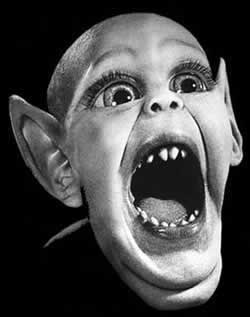
Weekly World News folds after 28 years

The final issue of the awesome Weekly World News will go on sale on 3rd August 2007.

Batboy is unavailable for comment.

Link

Wednesday, 25 July 2007

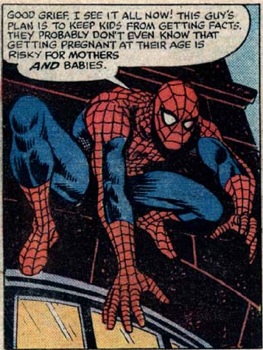
Spider-Man and planned parenthood


Spider-Man fan Andrew Farago recently stumbled upon a Planned Parenthood issue of The Amazing Spider-Man from the 1970s.

Thursday, 19 July 2007

Saturday, 14 July 2007

How to make a Captain America shield

The latest piece on Instructables teaches you how to make a Captain America shield out of a barbecue grill.

Link

Thursday, 12 July 2007

Bella Union 10th Anniversary Party

To celebrate an incredible ten years, Bella Union packed out the Southbank's Royal Festival Hall for two nights of music and majesty.

Although a stunning venue, the Royal Festival Hall's wonky acoustics do cause a sense of detachment for some fans. Nonetheless, most of the acts managed to triumph against the subdued ambience. On the first night, the Baltimore duo, Beach House, were a delightful opening act, while Scottish quintet, My Latest Novel played an impressive set of melodic indie-folk, fuelled by violin, xylophone and vocal harmonies.

Mercury-nominated Fionn Regan was totally arresting. After unplugging his acoustic and making his way to the very edge of the stage, he invited those seated in the first few rows to sing along with him during Be Good Or Be Gone. Substitute headliners, The Howling Bells, led by Juanita Stein's velvet voice, offered the mesmerising gothic country of Setting Sun and Broken Bones, while Tom Smith of Editors provided vocals for their beautiful version of Nick Cave's Where The Wild Roses Grow.

The enforced cancellation of Explosions In The Sky, made the second night the far more tantalising and Stephanie Dosen's wonderful voice drifts through the venue before The Kissaway Trail (mistakenly introduced by Paul Morley as The Faraway Trail) gave us their superior indie psych-pop. The Danish five-piece were the first band on either night to approach their performance with any bluster or bombast, and the change of pace is welcome.

It was the event headliners, Midlake, who stole not just the show, but the entire celebration. Tim Smith's vocals were crisp and lucid (despite a lyrical lapse during Roscoe); the piano and guitars were lush; and the varied tempos demonstrated the complex orchestration and accomplished musicianship that made The Trials Of Van Occupanther one of 2006's greatest albums. New song, The Pills Won't Help You Now, written for the Chemical Brothers, should carve out an even bigger fanbase for the band. Guest spots from Romeo of The Magic Numbers, Stephanie Dosen, label founder Simon Raymonde and Paul Weller added little to the overall sound, but their collective presence certainly adds to the celebratory nature of the event.

Friday, 6 July 2007

Album Review: Healing The Divide

The concert captured on Healing The Divide was organised by Richard Gere's foundation of the same name, and recorded live at the Lincoln Centre in New York. It features performances from Tibet's Gyuto Tantric Choir and India's Anoushka Shankar, as well as genre-bending duets from Tibetan avant-garde musician Nawang Kechong with Native American master R. Carlos Nakai; and maverick composer Philip Glass accompanied by Gambian virtuoso Foday Muso Suso. It also features a four-song set by Tom Waits, backed by Grammy award-winning, California string group, The Kronos Quartet.

After a five-minute special address from the Dalai Lama, the music begins with the Gyuto Tantric Choir, ten monks who chant with the subterranean bass tones and simultaneous ethereal overtones of Buddhist sacred tradition. Short by Indian classical standards, Anoushka Shankar's offering, Nivedan, lasts eleven minutes, which is just time enough for her and tabla player Tanmoy Bose to give the piece a mode and melody.

The collaboration between Philip Glass and the Gambian griot Foday Musa Suso has a basic, almost waltzing ostinato that supports plaintive melodies from Jon Gibson on soprano saxophone, quick arpeggios from Glass on piano and, best of all, flickering syncopations from Suso's kora, the traditional instrument of African griots.

Two wooden flautists - the Tibetan composer Nawang Khechog and the Navajo-Ute composer R. Carlos Nakai - combine on a recording simply titled Peace Chants. Khechog opens the piece with the deep tones of a long Tibetan horn below Nakai's hovering flute phrases, and recites the bodhisattva vow to work for the enlightenment of all sentient beings.

Closing the concert and the disc is a unique series of collaborations between musicians who personify the spirit of adventure in contemporary music, as Tom Waits performs four of his classic songs accompanied by The Kronos Quartet. Waits plays up to his role of the indecorous oddball as he struts through ingenious variations of Way Down In The Hole, God's Away On Business, Lost In The Harbour and Diamond In Your Mind, quipping, "So his holiness goes to bed at 7:30? That's not the holiness I used to know."

If Healing The Divide was intended as the perfect musical embodiment of the foundation's mission, it has totally succeeded. From the Dalai Lama to Tom Waits in just under an hour; how's that for bridging a cultural gap?

Album Review: The Fragile Army

The Polyphonic Spree's 2002 debut coincided with a period of new respect for over-sized band line-ups, from Broken Social Scene through Arcade Fire and Architecture in Helsinki. Since then, the Spree have made two wonderfully euphoric albums and have become an amazing live experience. What they have lacked, though, is any sort of substance.

Until now.

To revitalise their pursuit of joy-mongering, Tim DeLaughter and wife/co-leader Julie Doyle have pared their joyous horde down from 28 members to 24, switched the band uniform from robes to black combat garb, and made a return to the more compact pop songs of the debut album. The songs on The Fragile Army are rock songs embellished with horns and choir. On the previous albums the horns and choir were the songs.

The title track is an anti-Bush Bohemian Rhapsody, while Section 29 [Light To Follow], which establishes the record's over-arching subject - "love in a mixed-up time" - explores new sounds for the group, from electronic beats to an Air-like bass groove, achieving a spacey ambiance.

Section 31 [Overblow Your Nest] is one of DeLaughter's more emotionally sophisticated songs and also an existential assertion of self, "I want this world to know that I'm alive," he cries on the surging chorus. It's an individualistic mantra that's at odds with Spree's egoless concept - many voices joining as one to accomplish any goal, overturn any war monger. More familiar are his Wayne Coyne-esque claims of "together we're all right" on Section 25 [Younger Yesterday] and "when we're both together, I know that we'll be just fine" on Section 26 [We Crawl].

While the emergent first single Section 22 [Running Away] is thrilling, it's Section 30 [Watch Us Explode (Justify)] that is the most comprehensive demonstration of what the Spree can do, with its trilling flutes, imperial horns, bombastic strings and fleet-fingered guitar fills.

The Fragile Army is an all-out orchestral and choral assault of optimism, and while it be the stop-start riff of Section 23 [Get Up And Go] or the clip-clop of 20-plus pairs of feet marching in time on Section 25 [Younger Yesterday] that gets you, rest assured you will succumb to this merry maelstrom that's triumphant from end-to-end.